4 Everyday Toilet Habits That Could Be Harming Your Pelvic Floor
You might not think twice about your bathroom routine, but some of the most common toilet habits can quietly undermine your pelvic floor health. Here are four to watch out for.
Most people assume that pelvic floor problems only develop after major life events like childbirth, surgery, or reaching a certain age. But the truth is, some of your everyday bathroom habits could be quietly placing unnecessary strain on your pelvic floor – regardless of how old you are or what stage of life you’re in.
The good news? Once you know what to look out for, these habits are easy to change. Here are four common toilet behaviours worth reconsidering.
1. Going to the Toilet “Just in Case”
It’s a habit many of us have picked up without thinking: visiting the bathroom before leaving the house, before bed, or before a long trip – even when there’s no real urge to go. It feels sensible, but over time, this can actually retrain your bladder to expect emptying before it’s full.
The consequence? Your bladder’s capacity can gradually shrink, leading to increased urgency and more frequent trips to the toilet – even when your bladder isn’t particularly full.
A better approach: Try to wait until you feel a genuine need to go. If urgency is already an issue, speak to your GP about bladder retraining techniques, which can help restore your bladder’s natural capacity over a few weeks.
2. Straining During Bowel Movements
Rushing through a bowel movement or trying to force one before your body is ready places significant downward pressure on your pelvic floor. Repeated straining can weaken the pelvic floor muscles over time and put stress on the surrounding organs and nerves. It’s also a well-known contributor to haemorrhoids, anal fissures, and in more severe cases, pelvic organ prolapse.
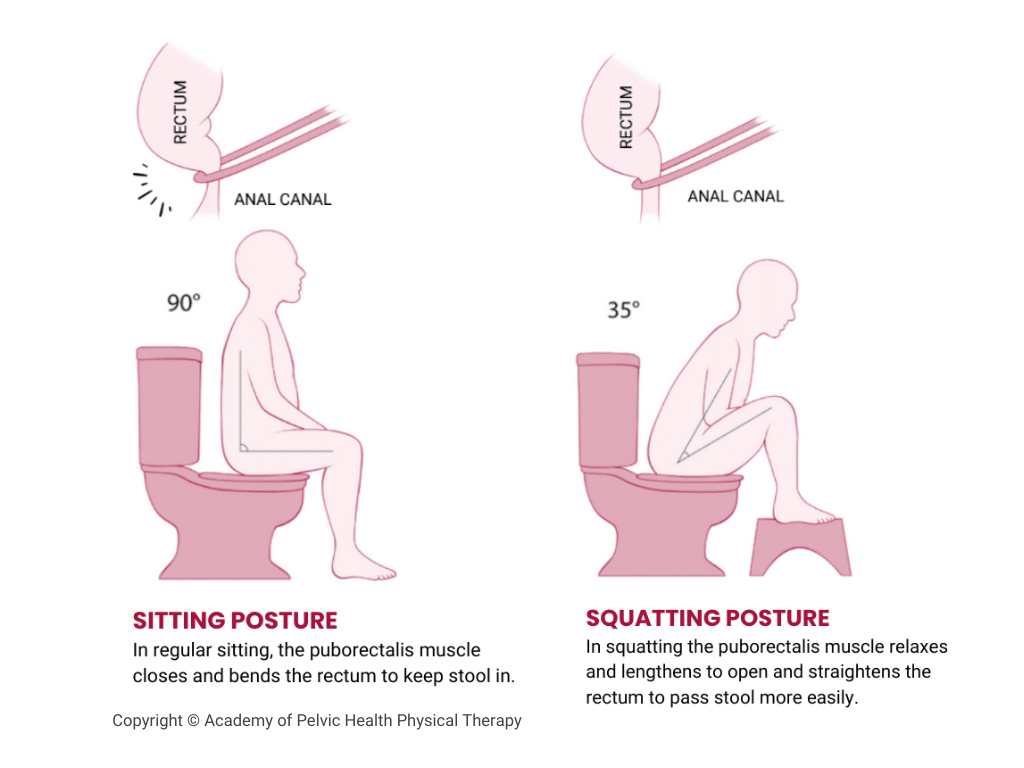
Correct toilet posture can protect your pelvic floorA better approach: Make things easier on your body. Place a small footstool under your feet to raise your knees above hip level – this straightens the anorectal angle and helps things move more naturally. Focus on slow, deep breathing rather than bearing down. And keep things moving smoothly by eating plenty of fibre-rich foods and drinking enough water throughout the day.
3. Spending Too Long on the Toilet
Whether it’s scrolling through your phone, catching up on the news, or simply enjoying a rare moment of peace and quiet, many people spend far longer on the toilet than they need to. While it might seem harmless, sitting on the toilet for extended periods places sustained downward pressure on your pelvic floor and rectum.
Over time, this can weaken the pelvic floor muscles and increase your risk of developing haemorrhoids. Health experts generally recommend keeping toilet visits to around 10 minutes or less.
A better approach: Leave your phone outside the bathroom. Use those few minutes as a brief mental reset – breathe, be present, and let your body do what it needs to do without distraction. If you regularly find yourself sitting for 15 minutes or more and still struggling, it may be worth speaking to a healthcare professional.
4. Hovering Over the Seat
This one is particularly relevant for women using public restrooms. Squatting or hovering above the toilet seat to avoid contact might feel more hygienic, but it prevents your pelvic floor muscles from fully relaxing. When these muscles can’t release properly, your bladder may not empty completely.
Over time, incomplete emptying can contribute to urinary urgency, increased frequency, and even a higher risk of urinary tract infections.
A better approach: Sit down properly whenever possible. Your pelvic floor functions best when it can fully relax. If hygiene is a concern in public facilities, use a paper seat cover or lay down some toilet paper before sitting.
The Bigger Picture
Your daily bathroom habits matter more than you might think – and they matter at every age. Whether you’re 25 or 65, these small adjustments can help protect the muscles that support your bladder and bowel control, core stability, and sexual wellbeing.
Looking after your pelvic floor doesn’t require dramatic lifestyle changes. Often, it’s the simplest habits – sitting properly, not rushing, listening to your body’s signals – that make the biggest difference over time.
If you’re looking for more ways to support your pelvic floor health, regular pelvic floor exercises are one of the most effective things you can do. Tools like the Empelvic training cushion can help you build a consistent, effective practice – and your future self will thank you for starting today.