Often misunderstood and rarely discussed openly, the pelvic floor is a vital group of muscles and tissues that supports your entire pelvic region. Let’s explore what it is, how it works, and why it’s so incredibly important for your overall health and wellbeing.
Your Body’s Hidden Powerhouse
When we talk about core strength, we often think of abdominal muscles. But there’s a hidden powerhouse at the very base of your torso that plays a crucial role in everything from bladder control to back pain, and even sexual function—your pelvic floor.
Often misunderstood and rarely discussed openly, the pelvic floor is a vital group of muscles and tissues that supports your entire pelvic region. Whether you’re a man or a woman, young or old, understanding your pelvic floor is key to preventing common issues like incontinence, prolapse, and pelvic pain.
Let’s explore what the pelvic floor is, how it works, and why it’s so incredibly important for your overall health and wellbeing.
What Is the Pelvic Floor?
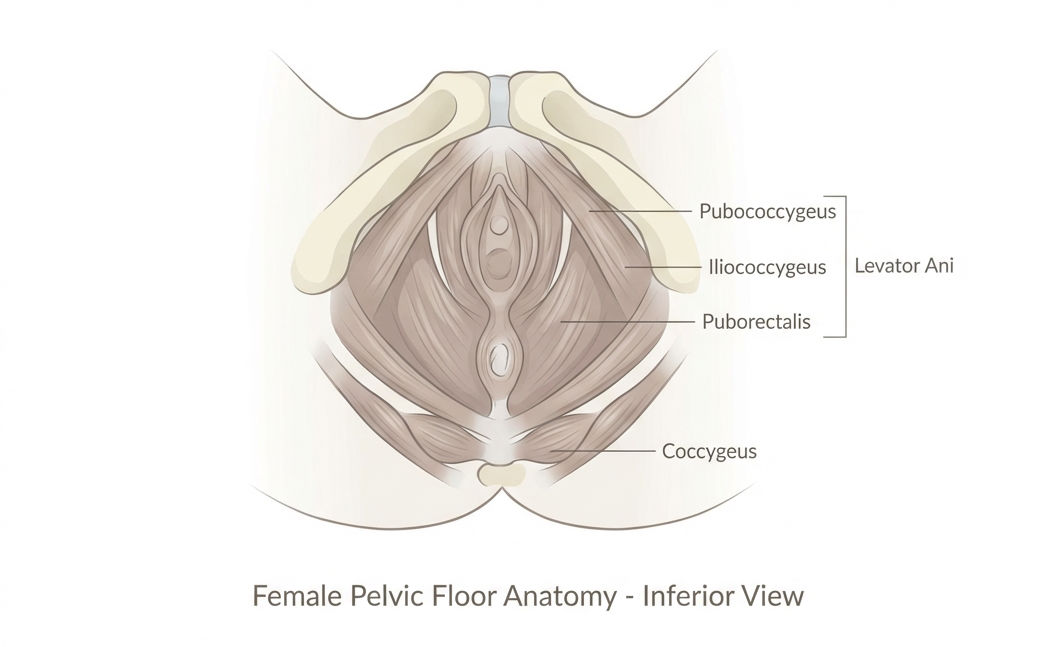
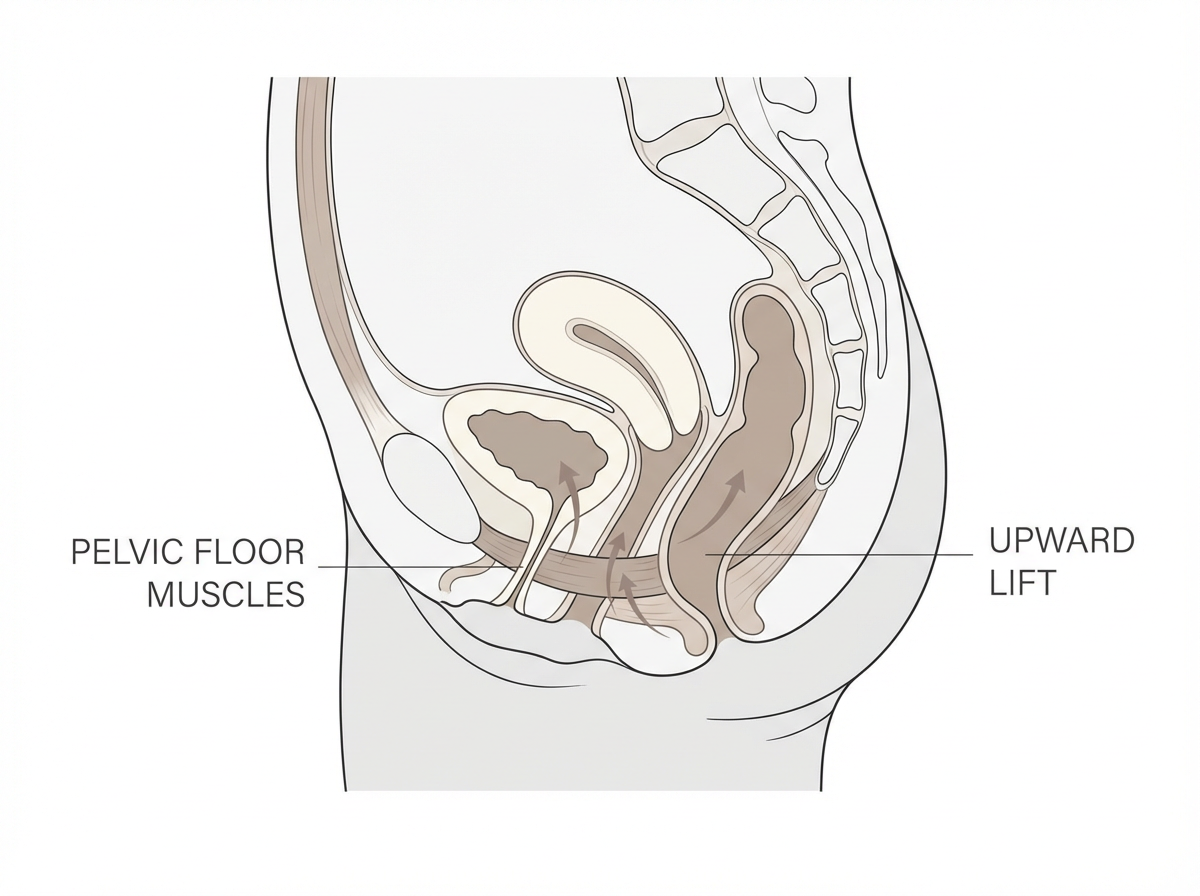
Imagine a muscular hammock or trampoline stretching across the bottom of your pelvis. That’s your pelvic floor. It’s not just a flat sheet of muscle—it’s a complex, multi-layered group of muscles and connective tissues that runs from your pubic bone at the front, to your tailbone (coccyx) at the back, and across to your sit bones on either side.
Anatomical view showing the structure of the pelvic floor muscles
These muscles are unique because they are both voluntary (meaning you can consciously squeeze them, like lifting your arm) and involuntary (meaning they also work automatically, like your heart beating, to keep you continent).
Where Exactly Is It?
To get a better sense of its location—
In women – The pelvic floor muscles surround the openings of the urethra (where urine comes out), the vagina, and the anus.
In men – The pelvic floor muscles surround the openings of the urethra (which passes through the prostate) and the anus.
It forms the “floor” of your core, supporting all the organs above it.
Meet Your Pelvic Floor
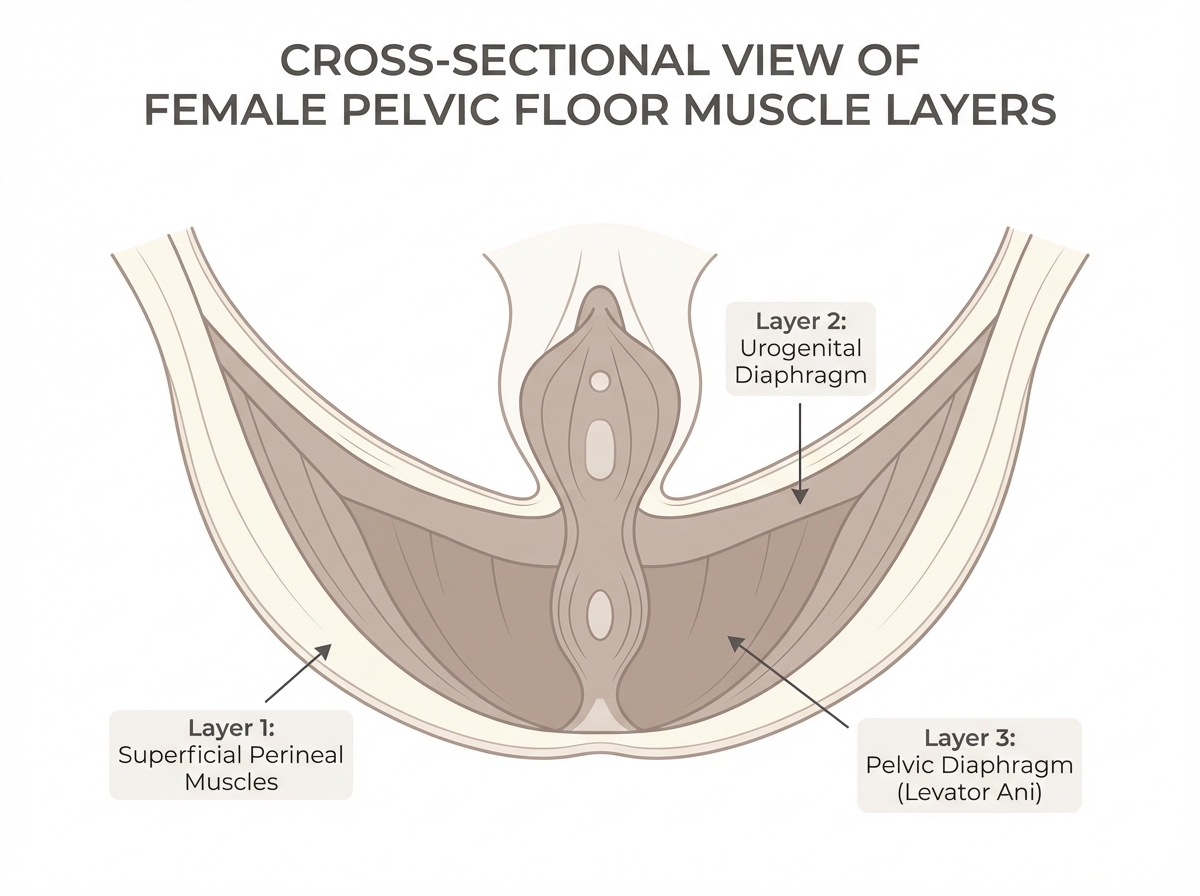
The pelvic floor isn’t just one single muscle — it’s a group of muscles arranged in layers, working together to provide strength, support, and control. These are usually divided into superficial (near the surface), intermediate, and deep muscles.
Superficial Layer
Bulbospongiosus (bulbocavernosus) – Surrounds the vaginal entrance in women and the base of the penis in men—involved in sexual function and supports continence.
Pelvic floor muscles diagram showing the layers
Ischiocavernosus – Runs along the sit bones and helps with erection in men and clitoral engorgement in women.
Superficial transverse perineal muscles – Provide support to the perineum, the area between the anus and genitals.
Deep Layer (Levator Ani Group)
This is the powerhouse group that forms much of the pelvic “hammock.” It includes—
Pubococcygeus – Runs from the pubic bone to the coccyx—helps lift and support the pelvic organs.
Puborectalis – Creates a sling around the rectum, playing a key role in maintaining bowel continence.
Iliococcygeus – Provides supportive lift to the pelvic organs.
Other Important Muscles
Coccygeus (ischiococcygeus) – Runs from the ischial spine to the coccyx—helps support the back of the pelvis.
External anal sphincter – Surrounds the anus and provides voluntary control over bowel movements.
External urethral sphincter – Surrounds the urethra and provides voluntary control over urination.
Together, these muscles form a dynamic, layered system that can contract, relax, and respond reflexively to the body’s needs. Each plays a role in support, continence, sexual function, and stability.
How Does the Pelvic Floor Work?
The pelvic floor muscles are designed to work in a coordinated way, much like a finely tuned orchestra. They need to be able to—
Contract and Lift – When you squeeze your pelvic floor, the muscles should lift upwards and inwards, closing off the openings.
Relax and Lengthen – Just as importantly, they need to be able to fully relax and lengthen to allow for urination, bowel movements, and comfortable sexual activity.
Respond Automatically – They should also react reflexively to sudden increases in pressure, like when you cough, sneeze, or lift something heavy.
This ability to contract, relax, and respond automatically is crucial for healthy pelvic function.
What Does the Pelvic Floor Do? (Its 5 Key Functions)
The pelvic floor is involved in far more than just bladder control. It has five primary roles—
1. Support for Pelvic Organs
This is perhaps its most fundamental job. The pelvic floor acts as a strong, supportive sling, holding up the bladder, bowel, and (in women) the uterus. Without this support, these organs can descend, leading to conditions like pelvic organ prolapse.
2. Continence (Bladder and Bowel Control)
This is the function most commonly associated with the pelvic floor.
Stopping Leaks – When you need to hold on, the pelvic floor muscles contract around the urethra and rectum, keeping the openings closed. They also respond reflexively to sudden pressures (like a cough or sneeze) to prevent accidental leaks.
Allowing Emptying – When you’re ready to go to the toilet, the pelvic floor muscles must relax fully to allow urine and faeces to pass easily. If they don’t relax, it can lead to straining, constipation, or difficulty emptying the bladder.
3. Sexual Function
The pelvic floor muscles play a significant role in sexual health and pleasure for both men and women.
In women – They contribute to sensation, arousal, and orgasm. Overly tight or weak pelvic floor muscles can contribute to painful intercourse (dyspareunia) or difficulty achieving orgasm.
In men – They are important for erectile function and ejaculation. Weakness can contribute to erectile dysfunction, while tightness can cause pain during or after ejaculation.
4. Core Stability and Posture
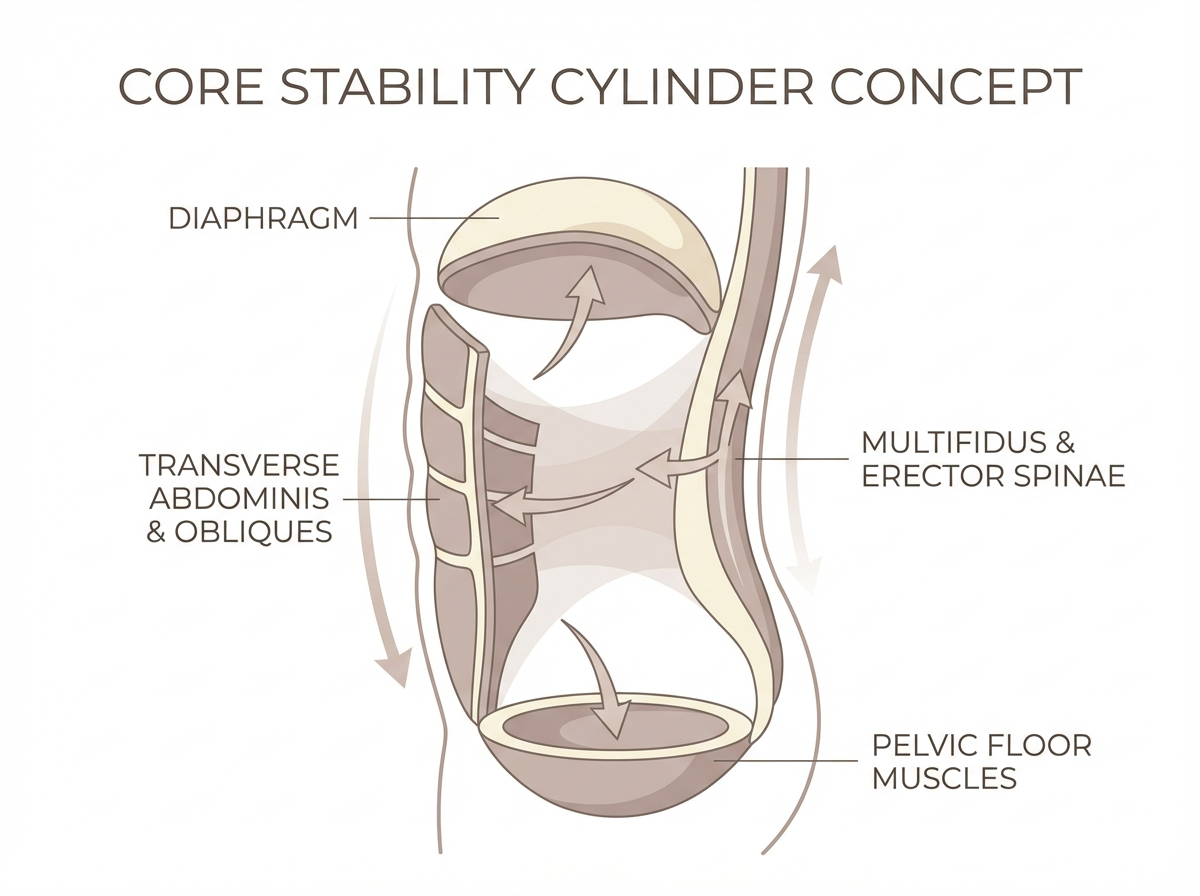
The pelvic floor is an integral part of your deep core muscle system. It works in synergy with your diaphragm (breathing muscle), deep abdominal muscles (transversus abdominis), and deep back muscles (multifidus) to stabilise your spine and pelvis.
The core cylinder: diaphragm (top), abdominal muscles (sides), back muscles (back), and pelvic floor (bottom)
Think of your core as a cylinder—
Top – Diaphragm
Front/Sides – Abdominal muscles
Back – Back muscles
Bottom – Pelvic floor
When these muscles work together, they create a stable base for movement and protect your back. If the pelvic floor isn’t functioning well, it can impact overall core stability and even contribute to back pain.
5. Circulation and Lymphatic Drainage
The rhythmic contraction and relaxation of the pelvic floor muscles act like a pump, helping to circulate blood and lymph fluid in the pelvic region. This is important for tissue health and can aid in reducing swelling or congestion.
What Happens When the Pelvic Floor Doesn’t Work Well?
When the pelvic floor muscles are not functioning optimally, a range of issues can arise. These problems are common, but they are not normal and can often be treated.
1. Weak Pelvic Floor Muscles
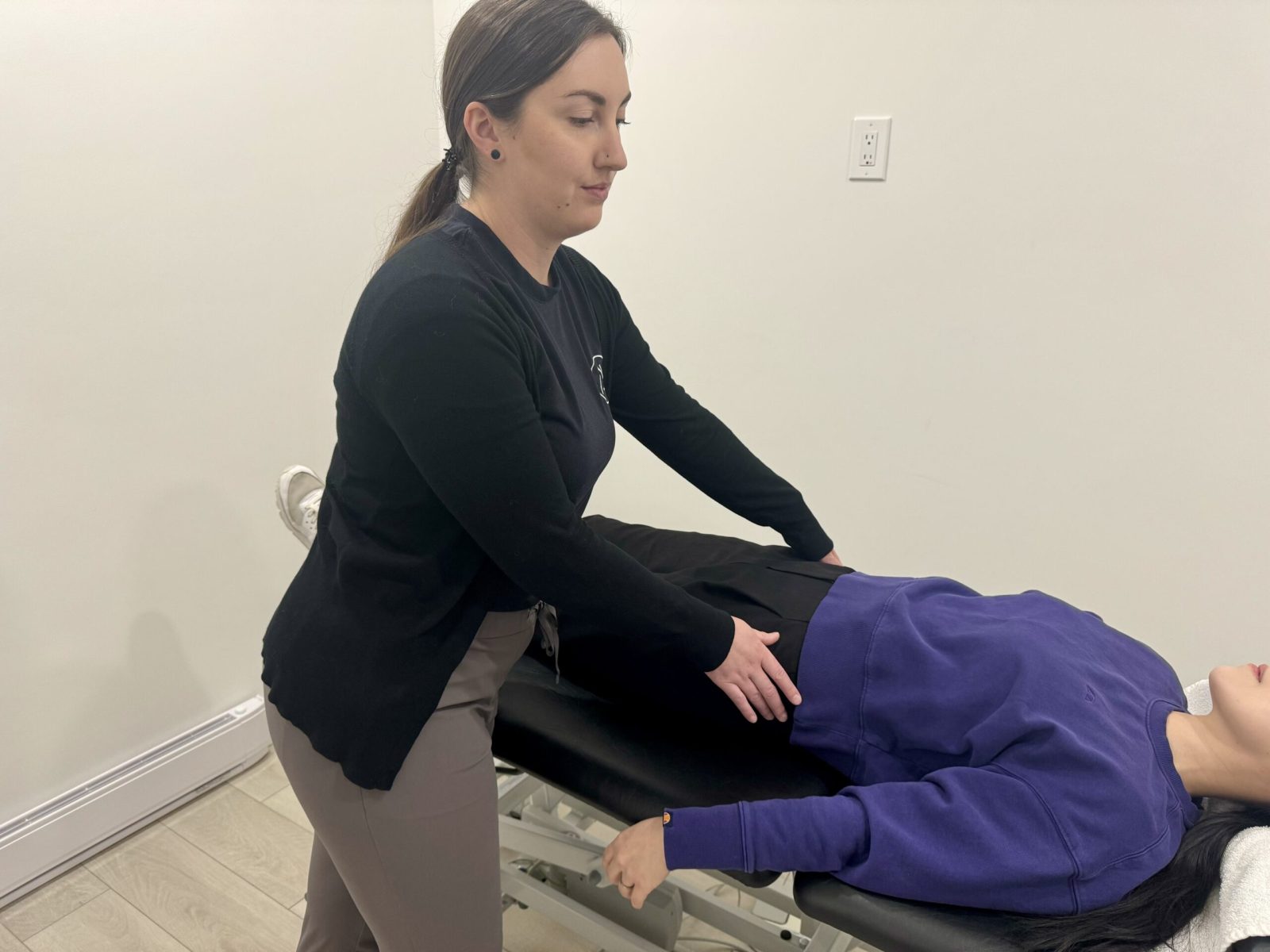
Women’s health physiotherapy for pelvic floor issues
Weakness can lead to—
Stress Urinary Incontinence (SUI) – Leaking urine with coughs, sneezes, jumps, or lifts.
Pelvic Organ Prolapse – A feeling of heaviness or a bulge in the vagina (in women) as organs descend.
Faecal Incontinence – Difficulty controlling gas or bowel movements.
Reduced Sexual Sensation – Less sensation during intercourse.
2. Overactive or Tight Pelvic Floor Muscles
Muscles that are too tense or unable to relax fully can cause—
Pelvic Pain – Aching, burning, or sharp pain in the pelvis, perineum, or during intercourse (dyspareunia, vaginismus, vulvodynia in women—chronic pelvic pain syndrome in men).
Urinary Urgency and Frequency – Feeling a constant need to urinate, or difficulty emptying the bladder fully.
Constipation – Difficulty passing bowel movements due to muscles not relaxing.
Painful Bowel Movements – Straining and discomfort.
Factors That Affect Pelvic Floor Health
Many things can impact the strength and function of your pelvic floor—
Pregnancy and Childbirth – The weight of pregnancy and the stretching/trauma of vaginal birth are major factors.
Surgery – Hysterectomy, prostatectomy, or other pelvic surgeries can affect nerves and support structures.
Menopause – Falling oestrogen levels can thin and weaken pelvic tissues.
Ageing – Like any muscle, the pelvic floor can lose strength and elasticity over time.
High-Impact Exercise – Repeated downward pressure from running or jumping can strain the pelvic floor.
Chronic Coughing or Straining – Persistent coughing (e.g., from asthma or smoking) or straining with constipation puts constant pressure on the pelvic floor.
Obesity – Extra body weight increases the load on the pelvic floor.
Heavy Lifting – Improper lifting techniques can put excessive downward pressure on the pelvic floor.
Stress and Anxiety – The pelvic floor is highly reactive to stress, often tensing up unconsciously.
How to Keep Your Pelvic Floor Healthy
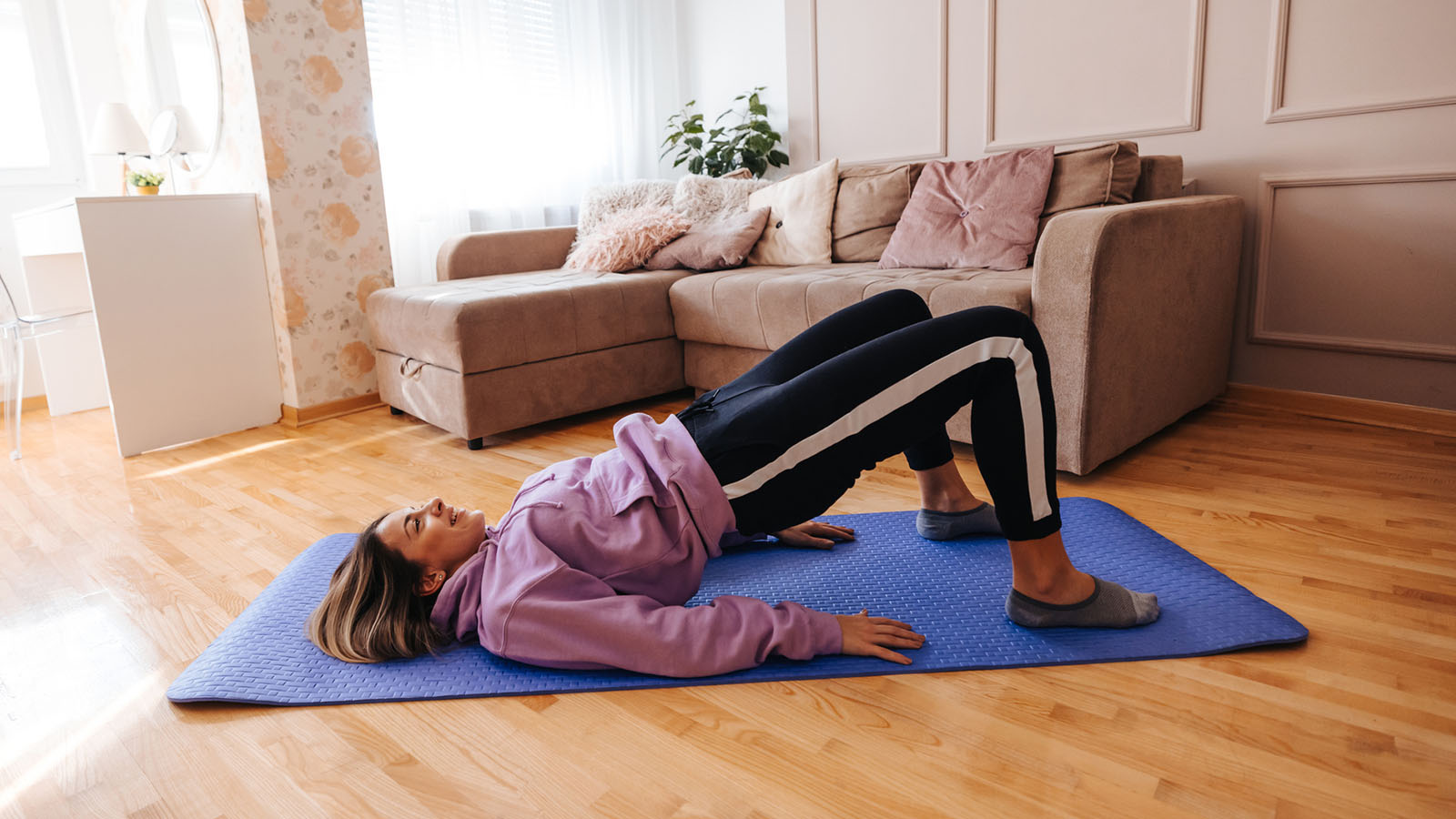
Pelvic floor muscle exercises and proper technique
The good news is that the pelvic floor is a muscle group that responds well to training and care. Pelvic floor exercises can be done anywhere and are key to maintaining pelvic health.
1. Pelvic Floor Muscle Training (PFMT)
Often called “Kegel exercises,” these involve consciously contracting and relaxing your pelvic floor muscles. But it’s not just about squeezing hard—it’s about—
Correct Technique – Ensuring you’re activating the right muscles (lifting upwards and inwards, not just squeezing your buttocks).
Strength and Endurance – Building both quick, strong contractions and longer, sustained holds.
Relaxation – Learning to fully release the muscles after each contraction.
A pelvic health physiotherapist can assess your technique and create a personalised program.
2. Breathing and Core Coordination
Learning to breathe deeply using your diaphragm helps your pelvic floor work in harmony with your core. The mantra “Exhale on Exertion” (exhaling as you lift, push, or cough) helps protect your pelvic floor by reducing downward pressure.
3. Good Bladder and Bowel Habits
Avoid “just in case” peeing – Only go when your bladder feels full.
Don’t strain – Allow your bladder and bowel to empty naturally. Use a footstool for bowel movements to optimise posture.
Stay hydrated – Drink enough water, but avoid excessive caffeine or fizzy drinks that can irritate the bladder.
4. Posture and Movement
Good posture reduces strain on your core and pelvic floor. Learning proper lifting techniques and modifying high-impact exercise can also protect these muscles.
5. Address Pain and Tension
If you experience pelvic pain, painful sex, or difficulty relaxing your pelvic floor, a pelvic health physiotherapist can use manual therapy, stretches, and relaxation techniques to release tension.
When to Seek Help
If you experience any of the following, it’s a sign your pelvic floor might need some attention—
Leaking urine or faeces
A feeling of heaviness or a bulge in your vagina
Difficulty emptying your bladder or bowel
Pelvic pain, pain during sex, or pain with tampon insertion
Persistent low back or hip pain that doesn’t resolve with general treatment
These symptoms are common, but they are not normal, and they are treatable.
Your pelvic floor is a remarkable and hardworking group of muscles that plays a central role in your continence, support, sexual health, and core stability. It’s not just for women, and it’s not just about “doing Kegels.”
Understanding its functions and how to care for it is an investment in your long-term health and quality of life. Whether you’re looking to prevent problems, recover from childbirth or surgery, or address existing symptoms, a pelvic health physiotherapist can provide expert guidance.
Don’t let embarrassment stop you from seeking help. Your pelvic floor is your body’s hidden powerhouse — and it deserves your attention and care.
Take Action Today
If you’re experiencing any pelvic floor issues or want to learn proper exercises, consider consulting with a pelvic health physiotherapist. Your future self will thank you!